
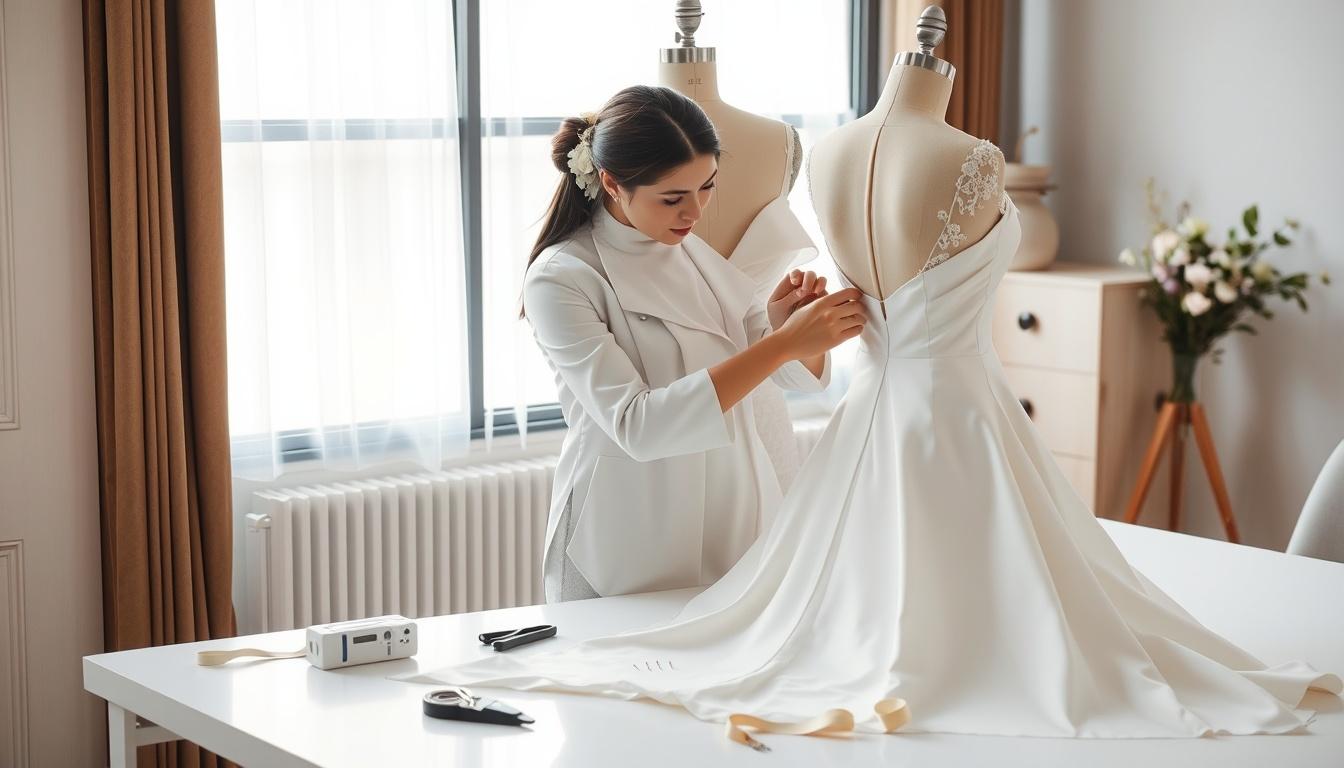
How Bridal Alterations Are Planned
Every project begins with an event date inquiry and a garment review. The fabric, construction, seam allowances, and requested fit are checked before any quote is confirmed, so the alteration plan reflects the actual garment rather than a general estimate.
For bridal gowns, a multi-fitting plan is often the most reliable approach. It can include bodice and strap refitting, hem and train adjustment, and bustle or fastening changes, with the number of fittings guided by the garment and the deadline.
Written scope, fitted stages, and careful final checks
A clear alteration plan helps each gown or occasion dress move from first fitting to collection with fewer surprises.
Occasionwear alterations follow the same careful process. A written scope helps define what will be adjusted, and any additional work is approved before it is started. This keeps the fitting process clear and aligned with the agreed design.
At collection, the garment is checked again so any small final adjustment can be handled carefully. Care and pressing notes are also provided where relevant, helping the garment stay ready for the event ahead.